A Season of Crane Monitoring
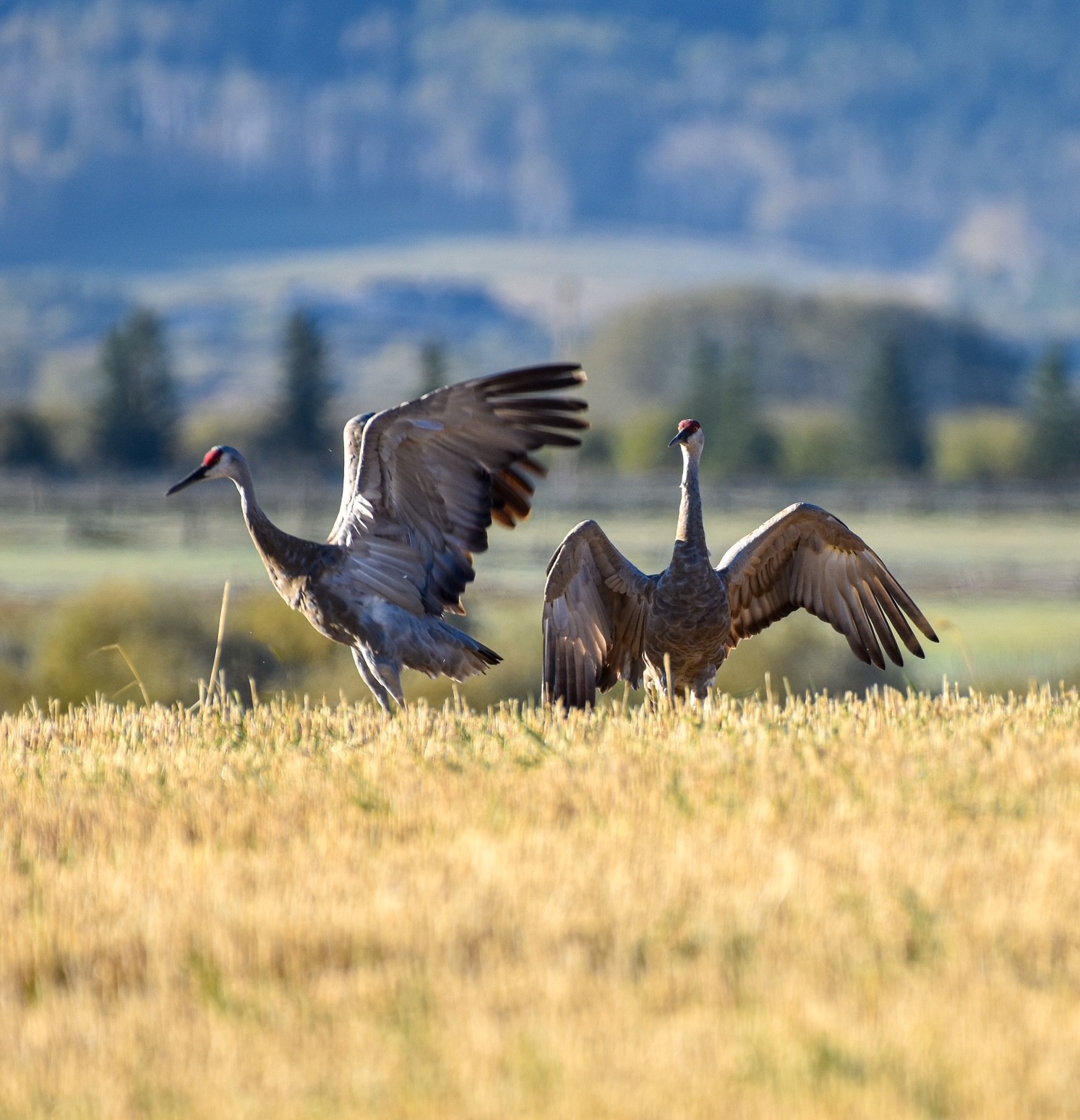 Photo: Anna Kirkpatrick
Every fall, Greater Sandhill Cranes (Antigone canadensis) gather in Teton Valley before beginning their migration south for the winter. Teton Valley is the largest pre-migration staging area for Sandhill Cranes in the Greater Yellowstone Ecosystem and one of the most important staging areas for the Rocky Mountain Population. Cranes typically spend four to six weeks here, arriving in late August and early September and migrating south at the end of September or early October, depending on available foraging resources and weather patterns
This annual gathering depends on the availability of the right habitat. Cranes need secure wetland roosts where they can spend the night undisturbed from humans or predators, along with agricultural fields where they can forage on waste grain. Ideally, these resources are within one to two miles of one another, allowing cranes to maintain their fat reserves for migration. In the morning, cranes leave their night roosts for nearby agricultural fields, often harvested barley fields, where they forage until mid-morning. They may spend the middle of the day loafing in wetlands, meadows, and pastures before returning to agricultural fields in the evening. At dusk, they return to shallow wetlands, marshes and stretches of the Teton River to roost.
Because these critical habitats, functional wetlands and agricultural landscapes, are increasingly difficult to find together, monitoring helps us understand how cranes are using the valley and how their habitat is changing. Since 2003, Teton Regional Land Trust (TRLT), along with partners (Idaho Department of Fish and Game and United State Fish and Wildlife Service) and volunteers (Idaho Master Naturalists), have monitored staging cranes in Teton Valley. Surveys conducted throughout the fall track where cranes are congregating and what types of agricultural fields they are using. More than 85% of the cranes observed during monitoring have congregated in harvested grain fields, where waste grain is readily available and cranes can more easily detect predators. Monitoring also helps identify important night roosts and foraging areas, giving us a clearer picture of the habitat cranes rely on during this critical part of their migration.
This work is a community effort. TRLT staff works alongside partners and volunteers who head out on designated routes each week to count cranes and record the habitat they are using. The information collected through these surveys adds to a longer-term understanding of crane use in Teton Valley and helps inform conservation efforts.
“We owe a great deal to private landowners. Without their partnership and commitment to the land and wildlife, we would not be able to support the 1,100- 1,300 cranes that return to this valley year after year. Their stewardship shows that conservation and agriculture can work hand in hand to be beneficial to both wildlife and local communities,” said Stewardship Coordinator Niah Pennington.
One of those efforts is Grain for Cranes, a program developed through the Greater Yellowstone Sandhill Crane Initiative. Through the program, TRLT and partners (IDFG and Intermountain Aquatics) work with local farmers and landowners to make additional forage available to cranes. Farmers may delay or eliminate fall plowing so waste grain remains available for a longer period, while participating landowners can establish food plots specifically managed for Sandhill Cranes. These plots are located within one mile of protected night roosts, planted in barley and mowed rather than harvested in early September, leaving the grain on the ground for cranes to forage.
Since 2013, Crane Initiative partners have worked with landowners to establish 35 to 60 acres of Grain for Cranes each year. Together, monitoring, habitat protection and programs like Grain for Cranes help us better understand and support the places Sandhill Cranes depend on as they gather in Teton Valley before continuing their journey south.