Local Family and Teton Regional Land Trust Conserve 1,686 Acres of Farmland Along Critical Wildlife Migration Corridor in Fremont County
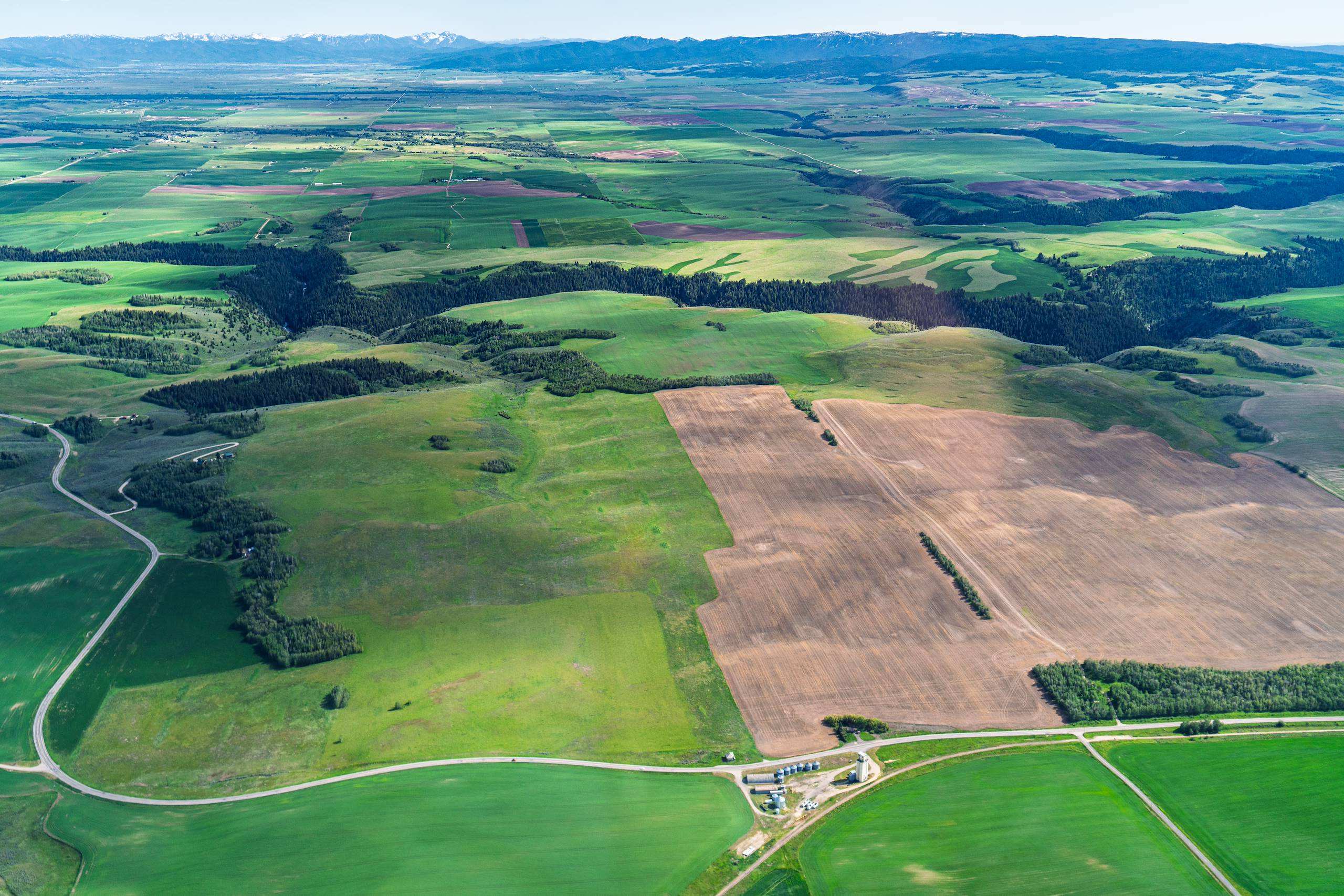
Photo: Eco Flight
Driggs, Idaho — A local family and Teton Regional Land Trust (TRLT) has permanently conserved 1,686 acres through the Flying A Bitch Creek Conservation Easement. This part of the farm has been in the family for more than 50 years and remains an active working landscape, where the family continues a long tradition of agriculture in Fremont County.
The family homesteaded in Fremont County in 1901, and four generations later, the family continues to work the land through ranching, dry and irrigated farming, and a seed potato business.
This is the fourth conservation easement Flying A Ranch has completed with TRLT. The project continues the legacy of Clen Atchley, an early board member of TRLT who was involved in the early efforts of the Fremont Heritage Trust, a local land trust that later merged with TRLT. Clen was a strong advocate for protecting eastern Idaho’s farmland to ensure that agriculture would remain part of the region’s future.
Clen passed away in 2024 while this project was still underway, but the completion of this project carries forward his commitment to keep this land in agriculture and protect critical wildlife for future generations.
“Our family first and foremost wants to thank everyone at the Teton Regional Land Trust,” said Laura Pickard. “This has been a multiyear project that has come to fruition through countless hours and significant effort. Their commitment to these projects exemplifies everything that makes this organization so important. We are so grateful to have been able to work with them to protect this very special part of our farm for many generations to come.”
In an interview with Wyoming Migration Initiative for its Animal Trails: Rediscovering Grand Teton Migrations video, Clen spoke about the family’s decision to conserve their properties:
“We realize in watching what’s happening in this county and Teton County that this land is getting to be more valuable, and it’s starting to disappear because they’re developing a lot of it. And we don’t want to see this developed.”
The importance of that decision extends beyond the property itself. Mule deer migrating from Wyoming pass through this landscape, and once they enter Idaho, they’re almost exclusively on private lands. Protecting working ranches and other private properties along these routes can help keep these migration pathways intact as development continues to change the landscape.
Approximately 1.3 miles of Bitch Creek flows from east to west along the southern property border, supporting riparian habitat for fish and wildlife. The broader landscape includes grasslands, agricultural fields, sagebrush shrublands, and forests of aspen and conifer, creating habitat and migration routes for a wide range of species.
“The Flying A property is an exceptional asset within this landscape, supporting a rich assemblage of wildlife species, including many classified as Species of Greatest Conservation Need,” said Josh Rydalch, Regional Wildlife Biologist for the Upper Snake Region with Idaho Department of Fish and Game (IDFG). “Mule deer originating from Grand Teton National Park regularly move through the area, utilizing mountain shrubland slopes along Teton Canyon. The property also maintains consistent use by moose, elk, sharp-tailed grouse, Sandhill Cranes, numerous raptor species, pollinators, grassland birds, and others.
“[The family] has demonstrated exemplary stewardship of their land, and it is truly rewarding to work with individuals so deeply committed to natural resource protection.”
The Flying A Bitch Creek Conservation Easement strengthens a much larger network of protected lands. The property is directly adjacent to two existing TRLT conservation easements and lies near other conserved private lands, State of Idaho lands, and public lands managed by the Bureau of Land Management and Bureau of Reclamation. These protected properties create a more connected landscape for wildlife while preserving the working agricultural lands that help define eastern Idaho.
The easement protects habitat for a diversity of wildlife including grizzly bears, moose, Yellowstone Cutthroat Trout, Columbian Sharp-tailed Grouse, Ferruginous Hawks, Short-eared Owls, and numerous bat and pollinator species identified as conservation priorities in the Idaho State Wildlife Action Plan. Riparian habitat along Bitch Creek provides important water resources and habitat throughout the year. The family has planted forage that is important to mule deer and other big game, including elk and moose.
Beyond its ecological importance, the conservation easements preserve an open, scenic agricultural landscape visible from Idaho State Highway 32 and help maintain the rural character of Fremont County in perpetuity.
“Flying A Ranch has shown what conservation looks like at its best: a long-term commitment to caring for the land, supporting agriculture, and protecting the natural resources that make eastern Idaho special,” said Kim Trotter, Executive Director of Teton Regional Land Trust.
The Flying A Bitch Creek Conservation Easement was made possible through a generous conservation easement donation from the landowners, along with funding support from the Agricultural Conservation Easement-Program—Agricultural Land Easements (ACEP-ALE) through the Natural Resources Conservation Service. Additional support came from the Idaho Department of Fish and Game, Knobloch Family Foundation, Heart of the Rockies Initiative, Cross Charitable Foundation, The Nature Conservancy in Idaho’s Climate Resilient Rangeland Opportunity Fund, funded by National Fish and Wildlife Foundation and the United States Department of Agriculture, and other generous supporters.
With the completion of this project, TRLT has now helped conserve almost 14,000 acres in Fremont County, and almost 46,000 acres across eastern Idaho with private landowners. The Flying A easement carries forward a family legacy while protecting farmland, wildlife habitat, and a connected landscape where agriculture and wildlife can continue to thrive together.
About Teton Regional Land Trust
Founded in 1990, Teton Regional Land Trust works with landowners to voluntarily conserve the working farms, ranches, wildlife habitat, waterways, and open spaces that define eastern Idaho. To date, the organization actively protects almost 46,000 acres across the region through voluntary conservation easements and land conservation projects.
NRCS ACEP-ALE Program
This Agricultural Land Easement (ALE) is acquired with funds provided, in part, under the Agricultural Conservation Easement Program (ACEP) 16 U.S.C. Section 3865 et seq. and 7 CFR Part 1468 for the purpose of protecting the agricultural use and future viability, and related conservation values, by limiting nonagricultural uses that negatively affect the agricultural uses and conservation values of the Property.
###